As enterprise data traffic surges due to AI-driven analytics and 8K internal media distribution, the ubiquitous 10Gbps backbone has reached its physical limit. For many network architects, the transition to 100G is often stalled by the daunting prospect of pulling new fiber. This is where the 100G BIDI QSFP28 10KM enters the frame—a strategic asset that allows for a tenfold increase in bandwidth without touching a single inch of existing single-strand fiber infrastructure.
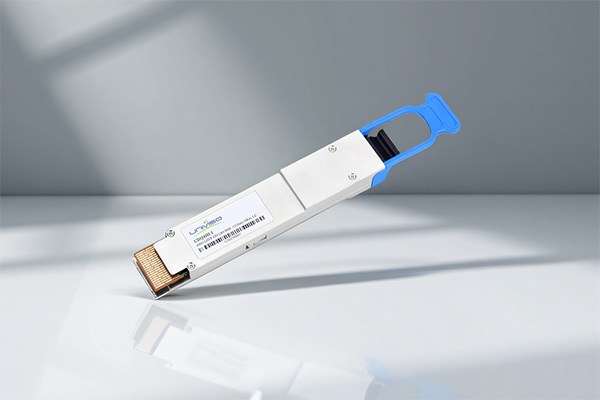 100G BIDI QSFP28 10KM
The 100G-BX10 is not just a faster 10G BIDI module. It represents a fundamental shift in signaling technology. By adopting PAM4 (4-Level Pulse Amplitude Modulation), the module transmits data on four distinct signal levels, allowing it to pack 100Gbps of throughput into a single optical wavelength pair (1271nm and 1331nm).
G.652 Optimization Specifically tuned for the dispersion characteristics of standard metropolitan single-mode fiber over a 10km span.
When selecting your 100G interconnect, it is crucial to understand the trade-offs between standard dual-fiber LR4 and the BIDI approach. For most enterprise campus environments (sub-10km), the BIDI variant offers superior ROI.
| Metric | 100G LR4 (Standard) | 100G BIDI (BX10) |
|---|---|---|
| Fiber Utilization | 2 Fibers (Tx + Rx) | 1 Fiber (Bidirectional) |
| Modulation | 4x25G NRZ | 1x100G PAM4 |
| Optical Connector | Duplex LC | Simplex LC |
| Max Reach | 10km | 10km |
Implementing QSFP28 100G BIDI 10KM requires more than just swapping hardware. To ensure carrier-grade uptime during the transition, Univiso's engineering team recommends the following migration protocol:
Before deployment, verify the insertion loss of your 10km span. While the 100G BIDI has a robust budget, the higher frequency of PAM4 makes it more sensitive to "dirty" patches. Aim for a total link loss of less than 6.3dB at 1331nm.
Unlike 10G links, 100G PAM4 requires Forward Error Correction (FEC). Ensure your core switches are set to KP4 FEC (IEEE 802.3bj/bm) to maintain a stable Bit Error Rate (BER) across the 10km link.
Engineering Alert: 100G BIDI transceivers must be used in U/D pairs. Installing two 1271nm-TX (BX10-U) modules at both ends will result in a No-Link status as the lasers will compete on the same frequency.
The 100G BIDI QSFP28 10KM is the most cost-effective solution for enterprises looking to future-proof their networks without massive civil engineering costs. By mastering the nuances of PAM4 signaling and single-fiber WDM, Univiso helps broadcasters and data centers scale their video backhaul and core interconnects with unprecedented efficiency.
Headquarter address :Room 1603, Coolpad Building B, North District of Science and Technology Park, Nanshan District, Shenzhen,China.518057