In the rapid expansion of AI and Large Language Model (LLM) training clusters, the network fabric is as critical as the GPU itself. For architects deploying NVIDIA H200 or AMD Instinct platforms, the choice of optical transceivers—such as OSFP112-400G-VSR4 and QSFP56-DD-400G-DR4—directly impacts the synchronization time between compute nodes. Every microsecond of latency in the 400G leaf-to-spine transition can stall a massive training job. This guide explores the technical vetting required to ensure high-speed, low-latency AI interconnects.
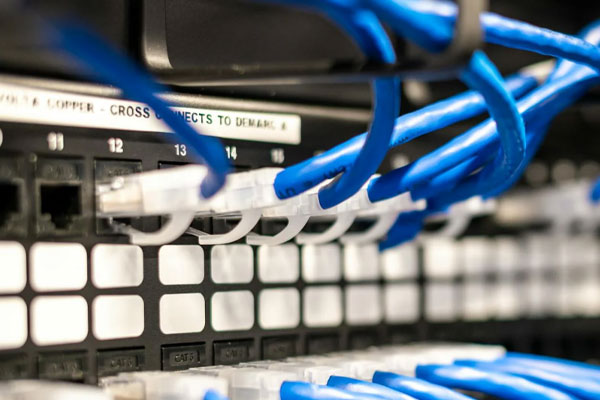
AI clusters require unprecedented port density and thermal efficiency. Sourcing managers must choose between the mature QSFP-DD and the thermally superior OSFP form factors based on their specific switch chassis cooling capabilities.
The OSFP112-400G-VSR4 (Very Short Reach) is specifically designed for the next generation of 112G SerDes switches. By integrating a dedicated heat sink into the module body, the OSFP form factor can handle the thermal load of continuous, high-load AI traffic without frequency throttling. This makes it the preferred choice for top-of-rack (ToR) connections where airflow is restricted but bandwidth demand is at its peak.
For data centers utilizing standard Ethernet stacks, the QSFP56-DD-400G-VSR4 offers a more traditional path with excellent backward compatibility. While it requires 8x50G PAM4 lanes, it remains highly efficient for intra-rack connections (up to 30m over MMF), providing a low-power alternative for non-GPU management clusters or older GPU nodes.
As the cluster grows beyond a single rack, single-mode fiber (SMF) becomes necessary to maintain signal integrity over longer distances within the data hall.
The QSFP56-DD-400G-DR4 provides a stable 500m reach over SMF. In AI architectures, it is frequently used in breakout configurations. A single 400G DR4 port can be split into 4x100G DR1 links, allowing high-radix spine switches to communicate directly with 100G NICs (Network Interface Cards) on storage or inference servers, optimizing port utilization across the fabric.
As switch ASICs evolve to 51.2T and beyond, the QSFP112 form factor is gaining traction. By utilizing 4x112G PAM4 lanes, it simplifies the electrical interface compared to 8-lane versions, reducing power-per-bit and overall cluster energy consumption—a vital metric for modern green AI data centers.
In AI clusters, the TDECQ (Transmitter and Dispersion Eye Closure Quaternary) value is the most critical metric for procurement. A high TDECQ leads to excessive FEC (Forward Error Correction) activity, which adds jitter and latency.
Low-Latency Audit: Sourcing 400G VSR4 or DR4 modules with a TDECQ below 3.9dB ensures that the KP4 FEC on the switch has minimal work to do, keeping the latency to an absolute minimum.
Thermal Overhead: AI workloads are not bursty; they are sustained. Vetting modules for their 24/7 thermal stability prevents "link flapping" during long training iterations.
A: While both are excellent, OSFP112 generally offers better thermal dissipation due to its larger size and integrated finned heat sink, which is critical for the continuous high-power consumption seen in GPU-to-GPU communication.
A: No, the DR4 variant typically requires an MPO-12 or MPO-8 connector using parallel single-mode fiber (PSM4). It is essential to verify the fiber polarity and connector type during procurement to avoid link-up failures.
A: Most carrier-grade OSFP112-400G-VSR4 modules operate within a 7W to 9W envelope, depending on the DSP efficiency and temperature grade.
Selecting the right interconnect—whether it is the high-density OSFP112-400G-VSR4 or the versatile QSFP56-DD-400G-DR4—is a strategic decision that defines the performance limit of your AI infrastructure. At Univiso, we specialize in providing lab-vetted, high-precision optics that meet the extreme demands of modern compute clusters. By prioritizing signal integrity and thermal stability, we help you build a network that keeps your GPUs running at 100% capacity.
Are you architecting a next-gen GPU cluster? Contact our optical engineering team today for a technical consultation on 400G and 800G low-latency solutions.
Headquarter address :Room 1603, Coolpad Building B, North District of Science and Technology Park, Nanshan District, Shenzhen,China.518057