The relentless growth of cloud computing, AI training clusters, and real-time analytics has pushed data center spine-leaf architectures to demand 400G per port. Among the many 400G optical specifications, QSFP56-DD-400G-DR4 has emerged as the industry workhorse for distances up to 500 meters over parallel single-mode fiber. This guide provides an exhaustive technical deep dive into QSFP56-DD-400G-DR4—its electrical and optical characteristics, power and thermal behavior, breakout configurations, interoperability with 100G ecosystems, and practical deployment best practices for hyperscale and enterprise data centers.
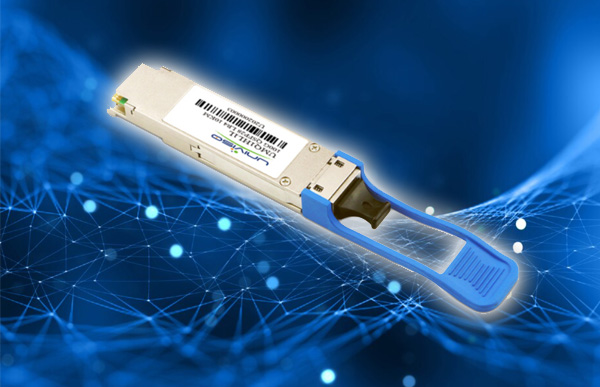
QSFP56-DD-400G-DR4 is a QSFP-DD (Quad Small Form Factor Pluggable Double Density) module that delivers 400G Ethernet over four parallel single-mode fibers (SMF) using four wavelengths (or four fibers) at 100G PAM4 per lane. The “56” in QSFP56-DD indicates the electrical interface supports 50G PAM4 per lane (with 56G symbol rate after encoding overhead), but for 400G it operates 8 electrical lanes at 50G each. However, the optical side uses only 4 lanes—each optical lane carries 100G PAM4. This is achieved by pairing two electrical lanes (50G+50G) into one 100G optical lane via gearbox functionality inside the module.
The DR4 specification follows the IEEE 802.3bs and 802.3cd standards. Key parameters include:
Data rate: 425 Gb/s (including FEC overhead) / 400G Ethernet payload
Optical interface: 4 parallel SMF lanes, each 100G PAM4 (106.25 GBd)
Wavelength: 1310 nm (center, typically 1304.5 to 1317.5 nm range)
Maximum distance: 500 meters on standard single-mode fiber (G.652)
Connector type: MPO-12 (usually 12-fiber, using 4 transmit fibers and 4 receive fibers, 4 unused)
Maximum power consumption: 10-12W (typical modern modules achieve 10W)
QSFP56-DD-400G-DR4 is often confused with QSFP56-DD-400G-FR4 (2km reach, duplex LC, 4 wavelengths on a single fiber pair) and QSFP56-DD-400G-VSR4 (under 100m, often multimode). For the 500-meter data center leaf-spine interconnect, DR4 is the optimal balance of cost, power, and reach.
Internally, a QSFP56-DD-400G-DR4 module contains: a DSP (digital signal processor) for PAM4 modulation and equalization, four DFB (distributed feedback) lasers at 1310nm, four photodiodes, and a gearbox converting 8×50G electrical to 4×100G optical. The host switch provides 8 electrical lanes (each 50G PAM4, also called 50GAUI-8 interface). The module’s DSP handles CDR (clock and data recovery), FEC (Reed-Solomon RS(544,514) typically), and linear equalization.
For 400G DR4, the transmit optical power per lane is typically between -2.9 dBm to +4.0 dBm (average). Receiver sensitivity is around -6.4 dBm for BER 1E-12 (pre-FEC). With a link budget of about 3.5 dB (including connector and fiber loss of 0.35 dB/km at 1310nm), 500 meters is reliably achieved with margin. Operating temperature range is usually 0°C to 70°C (commercial) or -40°C to 85°C for industrial grade.
To understand DR4’s position, compare it with the most common 400G alternatives:
| Spec | 400G DR4 | 400G FR4 | 400G LR4 | 400G SR4 (VSR4) |
|---|---|---|---|---|
| Form Factor | QSFP-DD, OSFP | QSFP-DD, OSFP | QSFP-DD | OSFP112, QSFP112 |
| Reach | 500m | 2km | 10km | 100m (MMF) |
| Fiber Type | 4 fibers SMF | Duplex SMF | Duplex SMF | 4 fibers MMF |
| Connector | MPO-12 | LC duplex | LC duplex | MPO-12 |
| Wavelengths | 1310nm (4 lanes) | 1271/1291/1311/1331nm | CWDM4 | 850nm |
| Typical Power | 10W | 10-11W | 12-14W | 7-9W |
| Cost per 400G | $$$ | $$$$ | $$$$$ | $$ |
DR4 hits the sweet spot for most intra-data center links: longer than VSR4’s 100m limit, but cheaper and lower power than FR4 or LR4. Only when you exceed 500m (up to 2km) should you consider FR4, and beyond that LR4 or ZR4 for 10km+.
One of the most valuable features of QSFP56-DD-400G-DR4 is its ability to break out into four independent 100G DR1 signals. Using a passive MPO-to-4×LC breakout cable (or MPO-to-MPO with four separate 100G DR1 modules on the remote end), a single 400G DR4 port can feed four 100G DR1 optical interfaces. This is ideal for connecting a 400G spine switch to multiple 100G leaf switches or servers with 100G NICs.
The breakout is possible because each of the four 100G optical lanes is optically independent. The host switch must support breakout mode in its firmware (port configuration set to "4×100G breakout"). When enabled, the gearbox inside the QSFP56-DD module or the switch ASIC remaps the 8 electrical lanes into four separate 100G logical ports. Note: Breakout cables are passive copper MPO-to-4×LC (no active electronics), so no additional power is consumed. For distances up to 500m, each breakout link retains the full 500m DR1 capability.
Similarly, some switches support 2×200G breakout (two 200G DR2 links) from a single 400G DR4 port, though this is less common.
A 32-port QSFP-DD switch (like those from Arista 7060X4 or Cisco 8111) populated with 32×400G DR4 modules consumes 320-384W just for optics. This requires careful airflow planning. QSFP56-DD-400G-DR4 modules have improved over early 400G generations: modern DSPs in 5nm or 7nm process reduce power to 10W or less (some as low as 8.5W). For comparison, an equivalent capacity using 100G LR4 modules would require 128 ports (128×3.5W = 448W), making 400G DR4 actually more power-efficient per gigabit (25mW/Gb vs 35mW/Gb).
Thermal management tips for QSFP56-DD-400G-DR4:
Ensure switch cages have at least 3.5 m/s airflow.
Populate modules in alternating slots to avoid hot spots.
Use modules with integrated temperature sensors and monitor via DOM (Digital Optical Monitoring).
Consider OSFP form factor for 800G future, but for 400G, QSFP-DD offers better density per rack unit (36 ports vs 32 ports per 1U for OSFP).
Data centers rarely migrate entirely to 400G overnight. QSFP56-DD-400G-DR4 can coexist with legacy equipment through:
400G to 100G breakout (as described above) connecting to existing QSFP28 100G LR4 or SR4 switches.
400G DR4 to 100G FR4 transponders (active gearbox devices) when different fiber types or wavelengths are needed.
Hybrid copper/fiber breakout cables where 400G DR4 port connects to four 100G CR4 (copper) ports over short distances.
Note: Directly connecting a QSFP56-DD-400G-DR4 to a legacy QSFP28 100G SR4 (multimode) is impossible due to fiber type mismatch. Always verify fiber plant and remote module specifications.
Follow these guidelines for reliable 400G DR4 links:
Use G.652.D or G.657.A1 single-mode fiber with low loss (≤0.35 dB/km at 1310nm). Maximum channel insertion loss must not exceed 3.5 dB (including connectors). For MPO-12 connectors, ensure proper polarity (Type B typically for parallel optics). Clean all MPO end-faces with one-click cleaners; even small dust particles cause high BER due to PAM4 sensitivity.
400G DR4 requires RS-FEC (544,514) on the host link. Disabling FEC will result in massive packet loss. Most modern switches auto-negotiate FEC, but check your configuration. Maintain at least 2dB optical link margin for temperature and aging.
Always use vendor-approved QSFP56-DD-400G-DR4 modules or generic modules with compatible firmware. Use DOM to monitor real-time Tx power, Rx power, temperature, and bias current. Alarms should be set for Rx power below -6.0 dBm or temperature above 75°C.
While QSFP56-DD-400G-DR4 is mature, the industry is moving toward 800G DR8 (8×100G optical lanes) using the same QSFP-DD or OSFP form factors. For the next 3-5 years, 400G DR4 will remain dominant for 500m reaches because it balances cost and performance. However, for new greenfield deployments, some operators are skipping directly to 800G DR8 using QSFP-DD800 or OSFP800, which can also run in 400G DR4 mode via a "lane split." If you anticipate future 800G upgrade, consider switches that support 800G modules while today populating them with 400G DR4 modules—this protects your investment.
QSFP28-DR4 does not exist. QSFP28 supports up to 100G per port. DR4 is a 400G specification. The correct comparison is QSFP56-DD (400G) vs QSFP28 (100G).
No. DR4 requires parallel 4-fiber connectivity via MPO-12. To use duplex fiber, you need a 400G FR4 or LR4 module that multiplexes four wavelengths onto one fiber pair.
DR4 is designed for single-mode fiber only. Using MMF will cause severe modal dispersion and link failure beyond a few meters. Do not mix fiber types.
Typically 32 ports (32×400G = 12.8Tbps) for QSFP-DD switches, or 36 ports for OSFP switches. Some high-density switches offer 36 QSFP-DD ports in 1U with advanced cooling.
For 400G aggregate bandwidth, a single 400G DR4 module is approximately 40-50% cheaper than four separate 100G LR4 modules, plus you save on switch ports, cabling, and power. This makes DR4 very cost-effective for new deployments.
No. 400G Ethernet over DR4 mandates RS-FEC (544,514) on the host electrical side and optional FEC on optical side. Bypassing FEC will violate standards and likely cause link errors.
Some modules support lower-speed modes (200G DR2 or 100G DR1) by disabling lanes. However, power savings are modest (~20-30%). Consult your module’s datasheet.
For network architects designing or upgrading spine-leaf data center networks, QSFP56-DD-400G-DR4 delivers the optimal combination of reach (500m), power efficiency (10W), breakout flexibility (4×100G DR1), and broad switch compatibility. While VSR4 suits shorter intra-rack links and FR4/LR4 address longer distances, DR4 covers the vast majority of leaf-spine connections in modern data centers.
When selecting QSFP56-DD-400G-DR4 modules, prioritize vendors that provide full diagnostic monitoring, temperature-hardened designs (up to 85°C case temperature), and guaranteed compatibility with your specific switch platform (Cisco, Arista, Juniper, Edgecore, Dell). Pre-deployment link testing with an optical power meter and CDR-based BERT (bit error rate tester) is highly recommended.
Our team offers free compatibility validation and link budget consulting for 400G DR4 deployments. We stock a wide range of QSFP56-DD-400G-DR4 modules from leading optical component manufacturers, all pre-coded with major switch firmware and backed by a 5-year warranty.
Ready to upgrade your data center to 400G? Contact us today for volume pricing, sample modules, and technical design support tailored to your existing fiber infrastructure.
Headquarter address :Room 1603, Coolpad Building B, North District of Science and Technology Park, Nanshan District, Shenzhen,China.518057